Support Groups
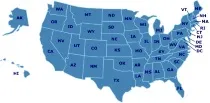
Homeschoolers have created networks of support to provide a way to make friends, get ideas and information, and to offer positive socialization opportunties to their children. You can join in! There are many groups to choose from, many with specific affiliations, like Christian groups or unschoolers’ groups. Some are eclectic, inclusive, and open to anyone. Whatever your interest, you are sure to find other like-minded parents. And if you don’t find what you are looking for, we’ve put together tips for starting your own group.
What's Popular
What is Natural Learning?
So what on earth is natural learning? Isn't all learning natural? What would you do different if you were following a natural learning approach? How can I pursue natural learning?
Local Testers
The Multnomah Education Service District provides this short list of local private testers for Multnomah County home schooled students.
Extending the Role
Most folks assume homeschooling dads go off to work each day while moms stay home to teach the kids. For many families, that's certainly the case. However, there's a new breed of homeschooling dads: those not satisfied being merely an observer. They don't want to come home from work and ask what Johnny learned today -- they want to be a part of that learning experience and learn it with him. These fathers are fostering a love of learning in their kids, and rediscovering it for themselves.
Educational Philosophies
This group is intended for the discussion of the philosophies, themes, and methods of classical education. Discuss the theories of classical educators such as Erasmus, Plutarch, Quintilian, Milton, Sayers, David Hicks, Ruth Beechick, Charlotte Mason, Laura Berquist, Jessie Wise and Susan Wise-Bauer, the Bluedorns, and others. Discuss books and syllabi on classical education.
Preschool Math: All Sorts of Sorting
Parents may think counting and recognizing numbers are the nuts and bolts of preschool math. While these are important skills for young mathematicians to master, building a foundation for complex mathematical thinking begins in the early childhood years. Sorting and classifying objects helps children begin to notice how items are alike and different, and creates an awareness that is vital for math learning.
Homeschooling Is Growing Rapidly in Many States of the United States
Includes statistics from around the country detailing the number of homeschooled students. Also discusses the growth of homeschooling around the world.
How To Use Social Media As A Learning Tool For Homeschoolers
Matching, out-of-date sweatsuits. The ability to recite lines from the Iliad in response to your peers’ discussion of a television show. Parroting your parents’ values. If you’ve paid attention to mainstream depictions of homeschooled children, these images are likely familiar. Homeschooled kids get a bad rap and are too frequently associated with social awkwardness due to a perceived lack of socialization with their peer group. However, with the dawn of social media, more homeschooled students—both those who are being schooled by more “traditional” methods and those who are students are virtual cyber charter schools—are able to better connect with their peers and other members of the homeschooling community.
Can a Single Parent Unschool?
These days, many parents find themselves alone, whether by choice or by circumstances. Many of these parents assume that homeschooling is not an option for them, but like many other assumptions, this can be self-fulfilling. Happily, homeschooling in single parent families is easier now than it has ever been. With commitment, creativity and support, single parent homeschooling can be not only possible, but very rewarding. Unschooling addresses the needs of both the homeschooling parent and the child in a single parent household.
Mad Dog Math
Mad Dog Math is a fun, exciting, motivating, and challenging supplement to any math curriculum. They've taken the basic facts and broken them down into bite-sized pieces that any child can master. A child progresses through a series of timed drills at his own pace.
Fun Books
To produce life-long learners, we need to show our children that learning is not just something that they get graded on or that only happens during certain hours of the day or certain times of the year. We need to help them hang on to the natural joy of learning that every child is born with, to help them see that learning new things is fun, and to help them realize that learning can take place anywhere and at anytime. Fun Books has put together a catalog of books, games, and other materials to help you in your efforts to produce life-long learners.