Testing & Evaluation
Testing is a requirement in many states. We make it easy to comply with testing requirements by gathering information and resources for testing services all in one place.
Sample Tests from the Oregon Department of Education
The Oregon Department of Education provides sample tests to demonstrate the content and types of questions students at grades 3, 4, 5, 6, 7, 8 and CIM might encounter on various Oregon assessment tests administered each year. Assessment subjects include mathematics, reading, science, social science, and extended assessments.
Curriculum Associates
Offers BRIGANCE Screening and Inventories products. Designed for use in elementary and middle schools, the CIBS-R is a valuable resource for programs serving students with special needs, and continues to be indispensable in IEP development and program planning.
National Merit Scholarship Corporation
Established in 1955, National Merit Scholarship Corporation (NMSC) is an independent, not-for-profit organization that operates without government assistance. NMSC conducts the National Merit® Scholarship Program, an annual academic competition for recognition and college undergraduate scholarships.
Approved Tests
A short list of test that meet the testing requirements in Oregon. This list is provided by the Multnomah Education Service District.
FairTest (The National Center for Fair & Open Testing)
The National Center for Fair & Open Testing (FairTest) works to end the misuses and flaws of standardized testing and to ensure that evaluation of students, teachers and schools is fair, open, valid and educationally beneficial. They place special emphasis on eliminating the racial, class, gender, and cultural barriers to equal opportunity posed by standardized tests, and preventing their damage to the quality of education. Based on Goals and Principles, they provide information, technical assistance and advocacy on a broad range of testing concerns, focusing on three areas: K-12, university admissions, and employment tests. FairTest publishes a quarterly newsletter, The Examiner, plus a full catalog of materials on both K- 12 and university testing to aid teachers, administrators, students, parents and researchers. They also have numerous fact sheets available on standardized testing and alternative assessment.
Testing and Assessment: What Do the Tests Tell Us?
Many parents arrive in the world of gifted education with a report full of tests results, supposedly defining their child as "gifted." But more often than not, parents have more questions than answers upon receiving those test results. And just as often, the short answers from the psychologist, the school, the teachers, and other parents do more to confuse than clarify.
Catforms Testing Service
Catforms Testing Service offers the 1970 California Achievement Tests with their own answer sheets and computer scoring. Key features of this system include graphical results in color, cumulative comparisons from year to year, and a detailed analysis of strengths and weaknesses in each area of the test. In addition to the original 1970 norms, they also have their own norms, the Catforms Percentiles, which are updated annually from the tests they have on file. The Catforms Percentiles are not a national norm, but are useful in comparing your students' performance with others from Christian schools and home schools today.
Educational Testing Services (ETS)
Educational Testing Services (ETS) is an organization that provides a range of products and services, including research, test administration, test scoring, and more. This organization develops and administers AP, GRE, and SAT tests, among others.
ACT vs SAT: Key differences between the ACT and SAT
ACT vs SAT: which test is a better fit for your student? Students may take whichever test they prefer (assuming there are available testing locations for both tests). If you’re not sure which test your child would prefer, consider the key differences between the ACT and SAT. Some students find that the ACT caters to their strengths more so than the SAT, and vice versa. Need a quick side-by-side comparison of the tests? Check out this ACT vs SAT Comparison Chart.
Bob Jones University Testing and Evaluation Services
Offers the Iowa Tests of Basic Skills (ITBS), the Stanford Achievement Test, the Cognitive Abilities Test (CogAT), and the Otis-Lennon School Ability Test (OLSAT). There are some specific guidelines for administering these tests, including requirements in some cases for a bachelor's degree, teacher certification, and/or special training in test administration. Also offered are test support products designed to help your child achieve higher test scores.
Hewitt Homeschooling Resources/PASS Test
The PASS Test was developed specifically for home schoolers. It has certain similarities to other achievement tests in that it estimates student achievement in the subjects of reading, language, and math. But is has important differences. It introduces four major improvements over most achievement tests presently available. First, it was designed for parents to administer at home. This can greatly reduce the stress level of testing. Second, it is untimed, which helps students to relax. Third, the student's approximate achievement level within his or her grade is initially identified by use of a brief accompanying placement test. This assigns each child to a test level where he or she is more likely to succeed, and it also allows for shorter tests. Finally, testing results show overall achievement as well as performance in each subject. The test is standardized and children's scores are compared with both national and home-schooling populations. This does not mean that the test is nationally normed, but that the scores are equated to those of public school students taking one of the nationally-normed tests. The states of Alaska, New York, and North Carolina have officially approved the PASS Test for purposes of state reporting. In other states which require testing, you should check with your local school district to make sure it meets their requirements.
Trust Tutoring
Trust Tutoring offers an Evaluation of Basic Skills, a standardized test of reading, writing, and math skills for ages 3-18.
Home School Testers in Oregon
This list is provided by the Oregon Department of Education.
The Case for Authentic Assessment
Assessment is authentic when we directly examine student performance on worthy intellectual tasks. Traditional assessment, by contract, relies on indirect or proxy 'items'--efficient, simplistic substitutes from which we think valid inferences can be made about the student's performance at those valued challenges.
Testing in the Schools
John Holt's article in which he lists questions that should be asked of school districts' testing policies.
Christian Liberty
To help you in the critical task of selecting appropriate materials for your child, Christian Liberty Press has developed several specialized services for homeschoolers. They can test your child and also provide a customized curriculum recommendation that is suited for your child’s skill level.
It's Time for the PSAT/NMSQT
Although this article has some outdated date information in it, it is a good discussion of the use of the PSAT/NMSQT (Preliminary Scholastic Aptitude Test and National Merit Scholarship Qualifying Test) for homeschoolers, especially those who are interested in qualifying for certain scholarships.
What does the SAT measure? Aptitude? Achievement? Anything?
When the first SAT was created, it was named the Scholastic Aptitude Test, signaling that its creators and the education world believed it to be a test of aptitude, or, a student’s ability to perform well in college. Aptitude tests supposedly measure talents that indicate possible achievement in the future, while achievement tests supposedly reveal how much someone has learned in the past. All these years later, we know the test never really did measure anybody’s aptitude to do well in college.
Local Testers
The Multnomah Education Service District provides this short list of local private testers for Multnomah County home schooled students.
Resources
-
 100 Timed Tests for Addition and Subtraction: Math Book for Kids Ages 4 to 7 | P...
 -
 Scholastic Success with Math Tests Grade 3 Workbook
 -
 Spectrum Test Practice 3rd Grade Workbooks, Math, Language Arts, and Reading Com...
 -
Carson Dellosa Spectrum 4th Grade Test Practice Workbook All Subjects, Ages 9 to...
-
Scholastic Success with Reading Tests Grade 3 Workbook
-
 Humble Math - 100 Days of Timed Tests: Multiplication: Grades 3-5, Math Drills, ...
 -
Scholastic Success with Math Tests Grade 6 Workbook
-
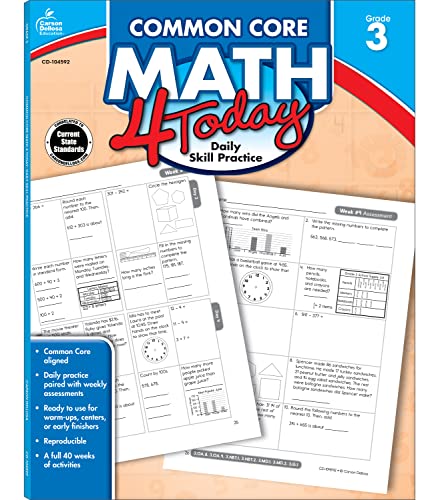
Carson Dellosa Common Core Math 4 Today 3rd Grade Workbooks, Telling Time, Fract...


Featured Resources
-
 High School Testing: Knowledge That Saves Money (The HomeScholar's Coffee B...
 -
Humble Math - 100 Days of Timed Tests: Addition and Subtraction: Grades K-2, Mat...
-
 Becoming Homeschoolers: Give Your Kids a Great Education, a Strong Family, and a...
 -
Scholastic Success with Reading Tests Grade 6 Workbook
-
100 Timed Tests for Addition and Subtraction: Math Book for Kids Ages 4 to 7 | P...
-
Carson Dellosa Spectrum 4th Grade Test Practice Workbook All Subjects, Ages 9 to...


